I have been helping beginning pianists discover the joy of music since 1973. Every child is unique, and my goal is to help each student develop not only excellent piano skills, but also confidence, discipline, determination, creativity, and a genuine love of making music. A strong beginning provides the foundation for many future successes.
What Is the Best Age to Begin?
Although every child develops differently, most children are ready to begin piano lessons between the ages of four and seven. More important than age, however, is a child's readiness to learn.
Beginning students should be able to:
- Show deep curiosity and enthusiasm for learning.
- Recognize letters and numbers.
- Have an interest in reading, including the ability to learn or recognize short words and symbols.
- Follow simple directions.
- Sit and focus for short periods of time, gradually increasing in duration through learning.
- Distinguish right from left.
- Recognize patterns, such as saying the musical alphabet A B C D E F G forwards, and eventually backwards.
Some younger children are ready before age four, while others benefit from waiting another year. During our introductory meeting, I will evaluate each child's readiness and help parents determine the best time to begin. Starting at the right time for you and the child creates confidence and leads to early success rather than frustration.
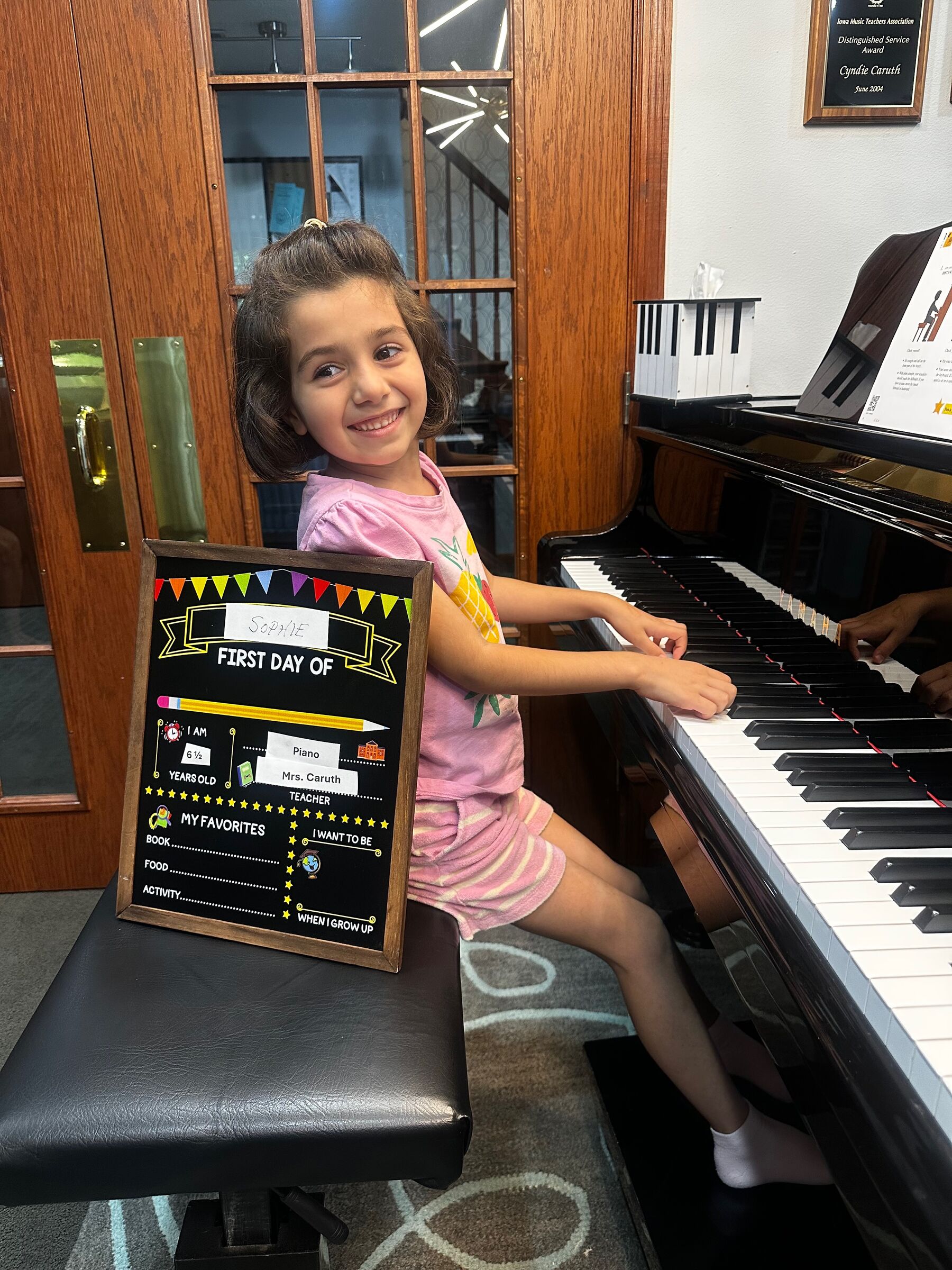
Every Child Learns Differently
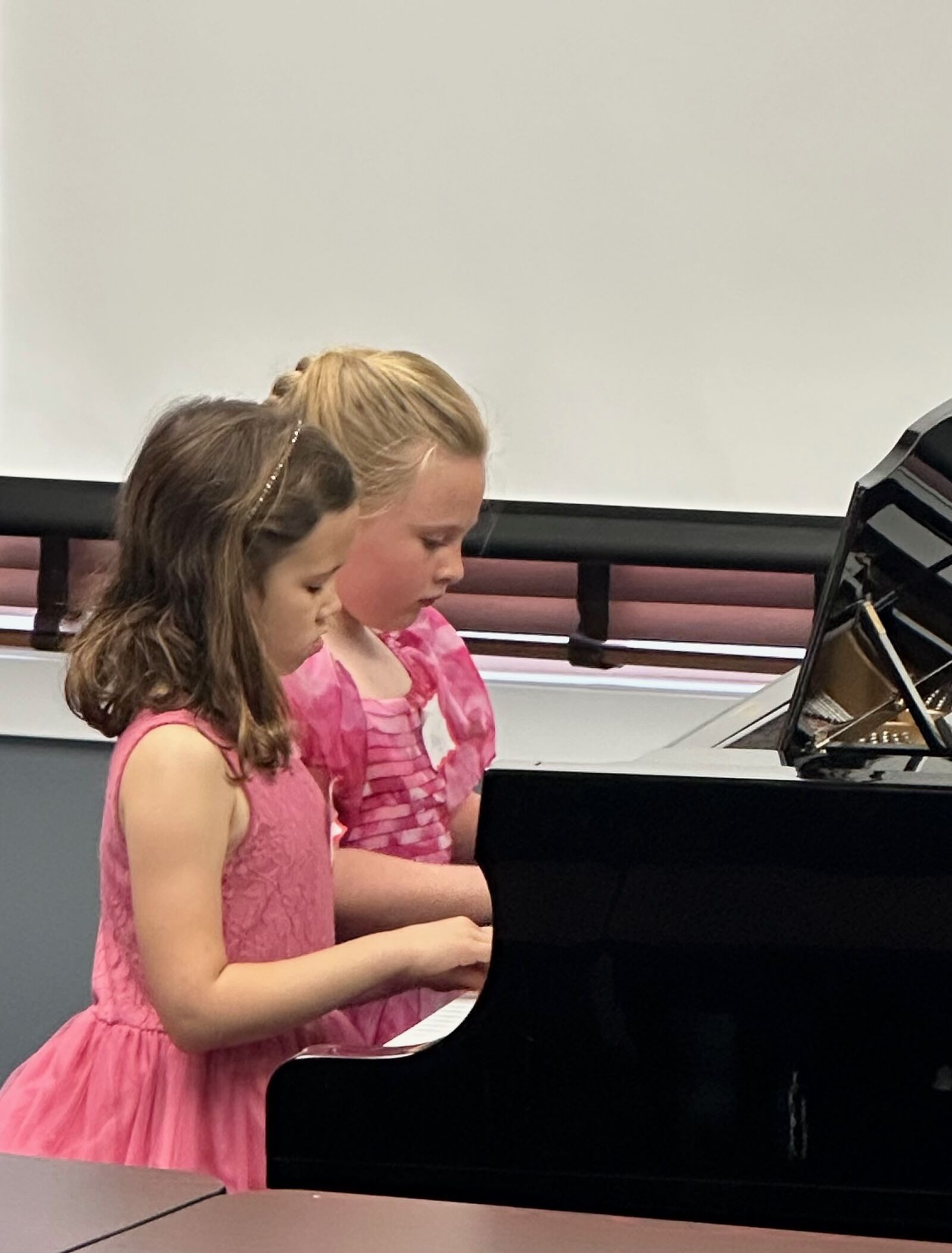
Some children are naturally analytical and enjoy solving musical puzzles. Others learn best by listening, moving, or creating. Some progress quickly through reading music, while others develop strong playing skills before reading fluently.
After teaching hundreds of beginning students over more than five decades, I have learned that flexibility is essential. Choice of materials and method books are carefully adapted to each student's learning style, personality, interests, and goals while maintaining high musical standards. Feeling successful is key!
Understanding a Beginner's Attention Span
Young beginners learn differently from older students. Rather than expecting a child to concentrate on one activity for an entire lesson, students stay actively engaged through a variety of carefully planned learning experiences.
A single lesson may include:
- Playing new pieces
- Reviewing familiar music
- Rhythm activities
- Technology tools
- Ear training
- Sight-reading
- Technical exercises
- Musical improvisation
Changing activities keeps lessons enjoyable while helping students grasp new concepts. Time "disappears" when everyone is engaged.
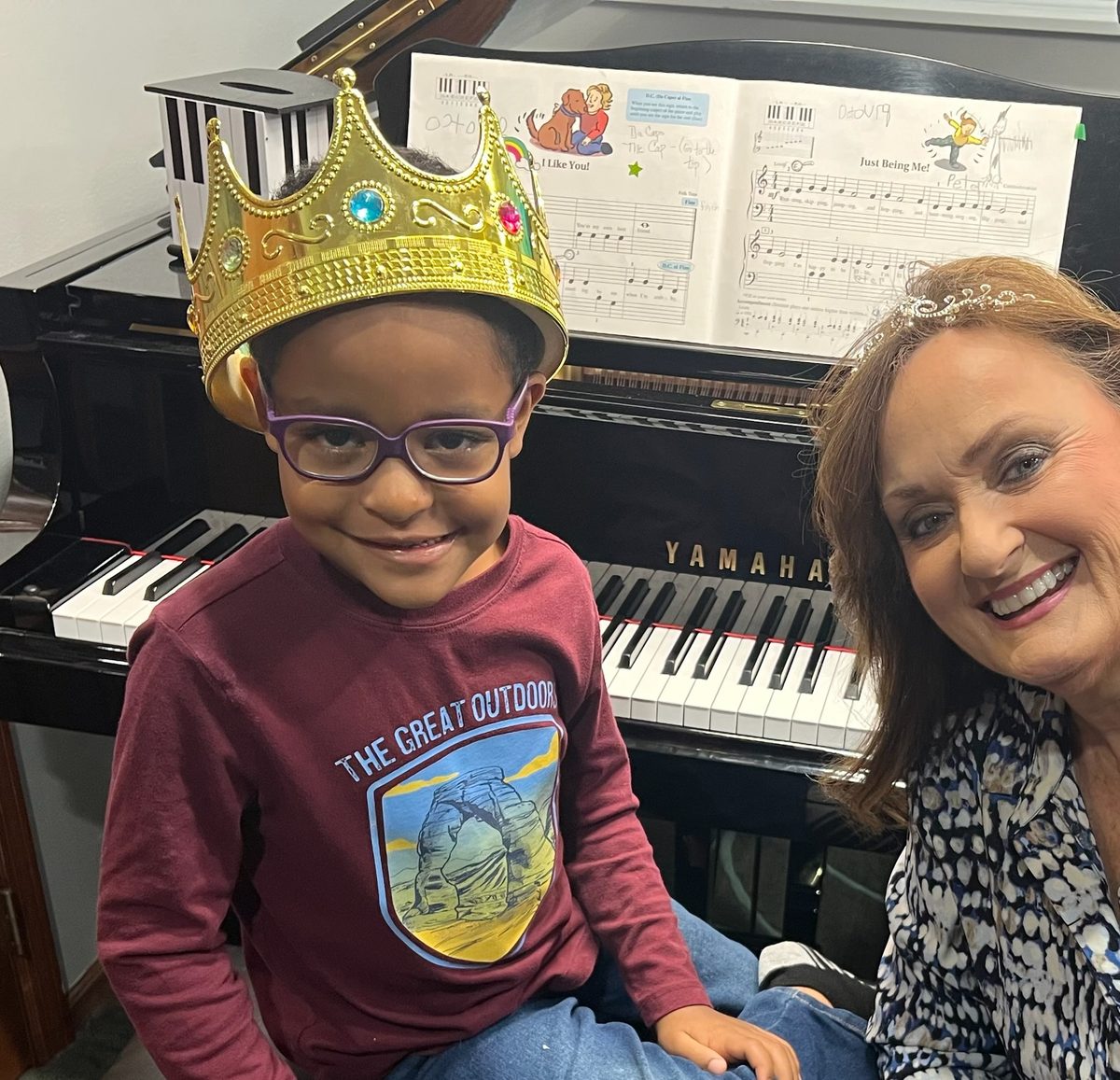
Success does not require hours of daily practice,
but consistency.
Developing Good Practice Habits
Your goal will be to help your child become effective by feeling positive about their practice, so each lesson is well prepared. Track any questions you may have so we can tackle problems at the beginning of the lesson.
For beginning students, frequent, short, and focused practice sessions each day are far more effective and manageable than panicked last-minute practicing.
I have discovered that students practice more efficiently when they are not pressured or timed. I do not use practice charts unless you request them - time well spent is the greatest reward, and quality of practice matters most. As students advance, practice time naturally increases according to age, ability, and goals.
During lessons, students learn how to practice - not simply what to practice. They develop skills such as:
- Counting aloud and accurately
- Practicing with purpose
- Setting small, achievable goals
- Breaking music into small sections
- Solving and tackling difficult passages
- Listening carefully
These learning strategies become valuable life skills that extend well beyond music.
The Parent's Role
Parents play an important role during the first several years of piano study - and you do not need to be a musician to advance your child's success. My own parents had no musical training, but their early support and active involvement empowered me to manage my own practice throughout high school. The most valuable support comes from creating a stable routine and offering consistent guidance. Success is a long-term venture.
Parents can help by:
- Establishing a regular, supervised practice time each day.
- Providing a quiet, distraction-free practice environment.
- Celebrating progress rather than expecting perfection.
- Encouraging persistence when challenges arise.
- Attending lessons and performances.
- Acting as a "second" instructor by taking lesson notes or video - you are asked to understand (not play) what a second grader understands, and to request further explanation at the lesson if anything is unclear.
- Providing a quality instrument with a full 88-key keyboard. A solid acoustic piano is recommended for better tone and control than a digital keyboard, but is not required.
Children quickly recognize when parents value music education, and that encouragement often becomes one of the strongest predictors of long-term success. Lessons become most rewarding when teacher, student, and parent work together as a team.
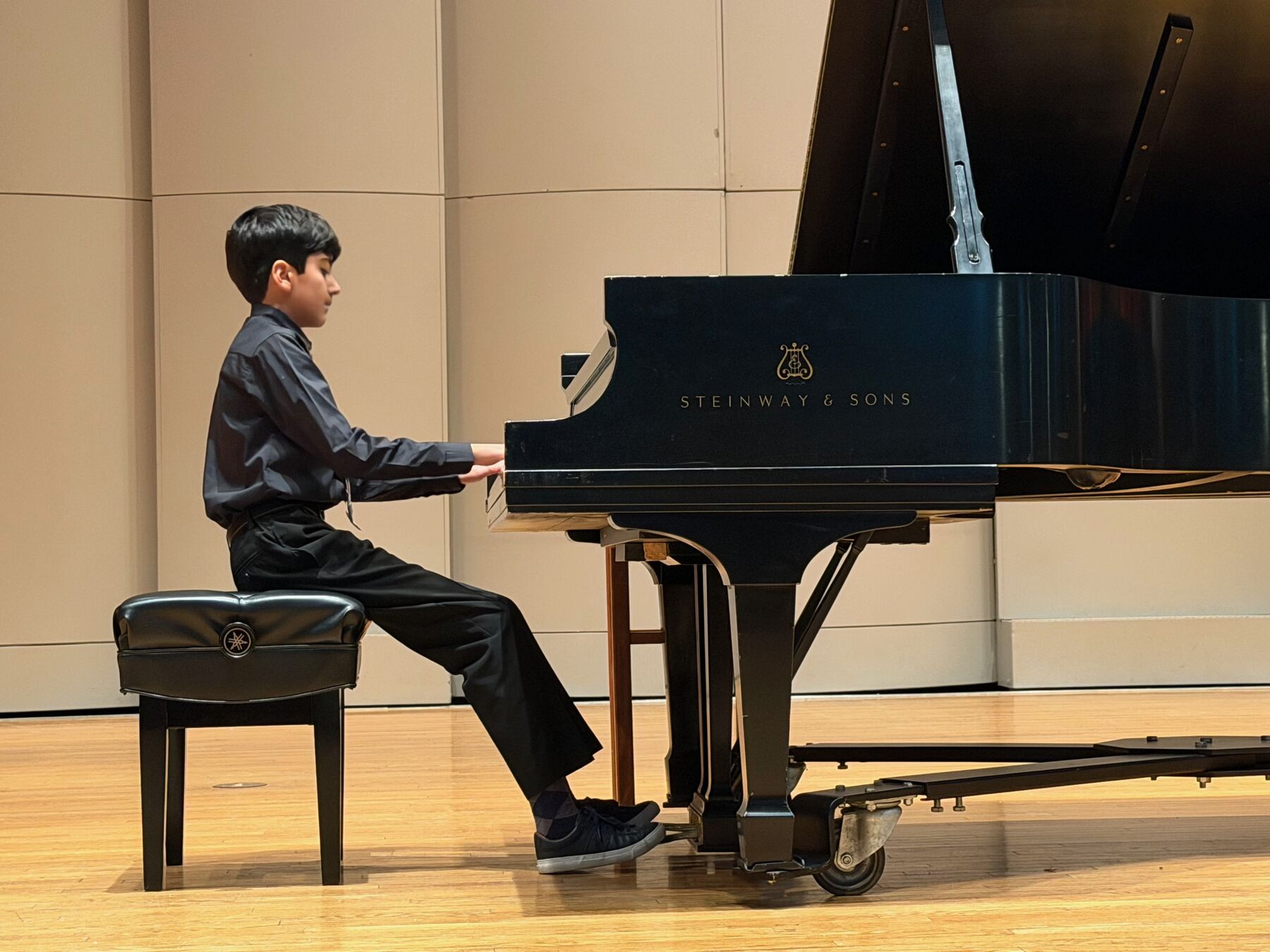
Preparing for Performances
For both beginners and parents, the first recital is an exciting milestone. A first performance is not about playing perfectly - it is about creating confidence, sharing, and celebrating progress.
In both group classes and private lessons, we discuss:
- Performance preparation
- Performance etiquette
- Entering and leaving the piano, and adjusting the bench
- Bowing properly
- Managing nerves and breathing
- Staying focused
- Recovering gracefully from mistakes
- Listening to others
These experiences teach valuable life skills that extend far beyond music. Over time, students become increasingly comfortable performing for audiences, speaking with confidence, and taking pride in their accomplishments.
More Than Piano Lessons
Students gradually develop advanced fine-motor control and coordination, reading skills, concentration, perseverance, responsibility, creativity, listening, problem-solving skills, and self-confidence. They experience the satisfaction that comes from setting goals and achieving them through consistent effort as they discover their own personal expression without limitations.
My goal is to provide every beginning student with a nurturing environment where excellence is the focus - where parents, teacher, and student pursue steady growth together, one week at a time.